
What the ICE reign of terror is doing to our kids
A guest essay on how Donald Trump's mass deportation campaign is harming all of America's children
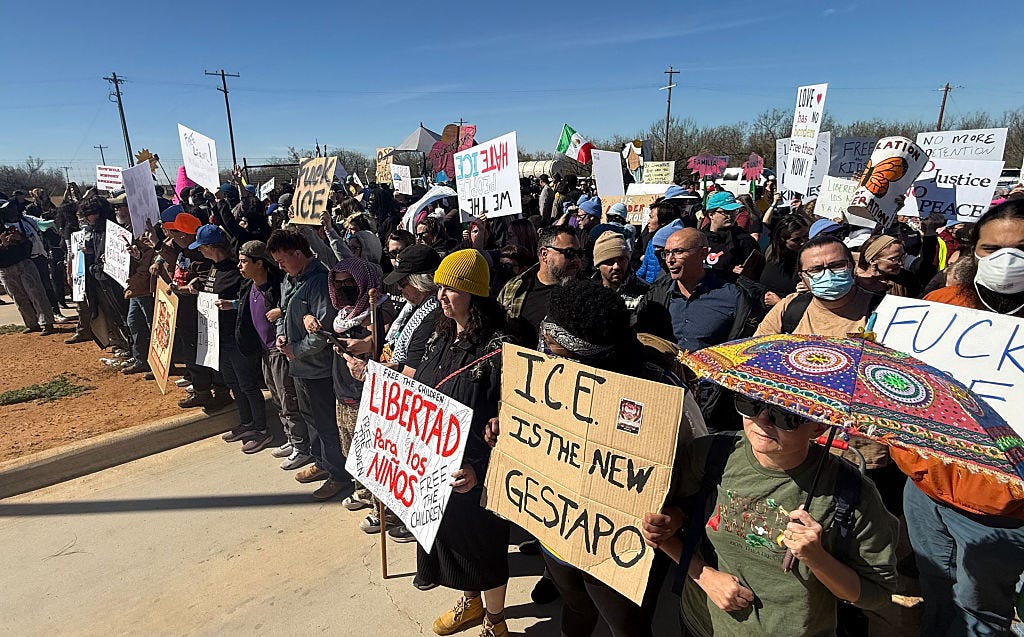
Last Friday, the first citywide general strike in America for decades shut down business as usual in Minneapolis as tens of thousands of marchers turned out to demand that ICE end the occupation and leave the city. Today, across the country, many more people will join in a national shutdown to demand an end to the funding of ICE.
As the economist and author Paul Krugman told us yesterday, the brutality and scale of the mass deportation campaign in Minneapolis have made the threat of Trumpism salient for Americans in a way that tariffs, the end of foreign aid, the dismantling of public health, and repeated violations of constitutional rights have not.
Why? Because, says Krugman, as terrible as those things are, the “machinery of the outrage happens offstage.” But when friends, neighbors, and fellow citizens are taken off the street, the brutality becomes personal — and people realize that there are things they can do push back, from blowing whistles, to participating in mutual aid, to joining in protest and participating in economic shutdowns.
Nowhere is the brutality of Donald Trump’s deportation efforts more evident than in its treatment of children, and that’s what author and fellow Substacker Anya Kamenetz explores in the guest post we bring you today.
Thank you so much to our supporting subscribers for making this newsletter possible. If you haven’t yet joined our community, why not become part of this and help us build the future of independent media today?
We bring you this post courtesy of Anya Kamenetz. Subscribe to The Golden Hour to read all of her work on politics, climate, children, mental health, and much more.
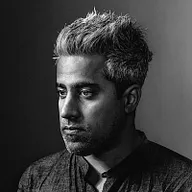
By Anya Kamenetz
When I think about the victims of our current reign of terror, I think about children.
Six children, teargassed inside a van in Minneapolis after the family was caught between federal agents and protesters on the way home from their son’s basketball game. Destiny Jackson, 26, told CNN that she had to administer CPR to her six-month-old baby.
Five-year-old Liam Ramos, in his blue bunny hat, taken with his father 1,300 miles from home to Dilley, Texas, to a family prison run for profit, in likely violation of a longstanding court order, where there are allegations of spoiled food and inadequate access to medical care, where he has reportedly fallen very ill. You can see drone footage of detained families, including children, protesting ICE, at great personal risk, there last week.
Six-year-old Yuanxin Zheng, deported with his father from New York City.
Six-year-old Annabella Rodríguez, found wandering the streets, crying, asking “Where’s Papi?” after her dad was grabbed by ICE in Morristown, New Jersey.
The six-year-old son of Renee Good, who had just been dropped off at his new school, whose stuffed animals were peeking out of the glove compartment when federal agents shot his mother dead. His charter school has had to switch to remote learning for students’ safety after becoming the focus of right-wing hate and death threats.
But these children, whose names we know, are not the only child victims of what the Trump administration is calling immigration enforcement. What’s happening is hurting a startling percentage of the nation’s school children in ways that will be measurably felt for decades.

As of 2022, one in four children in the United States had at least one foreign-born parent. That’s about 18 million children who may plausibly worry that they or their families could be targeted by ICE / CBP.
Many are staying home from school because of that worry, which is rational, because federal agents are making schools a target of their operations, after decades in which public schools were considered sanctuaries.
L. is a high school senior in the Minneapolis suburbs and the child of immigrants from West Africa. “One of my friends is Hispanic, and her parents aren’t letting her go to school,” she told me. “She has to carry her birth certificate and passport when she leaves the house. My little brother is scared to go out with his friends. He’s only 12. We got a message last week about ICE coming to another school in our district. I wasn’t surprised. It gets to a point where you’re disgusted, but you’re not shocked anymore.”
In November, Education Week surveyed principals who work with immigrant families. One in four reported reduced student attendance, and 15 percent said they had seen reduced enrollment. In a second national survey of high school principals, nearly two-thirds reported lower attendance from immigrant families. A research paper found that after crackdowns in the Central Valley of California, where a high percentage of students are Hispanic, missed days went up 22 percent compared to previous years. Los Angeles, the second-largest district in the country, counted an 8 percent enrollment drop this school year among English language learners who have been here less than three years. In the most-targeted neighborhoods in Minneapolis, school attendance has been off by an estimated 20 to 40 percent.
Even more school leaders are saying their students are showing fear, anxiety, distraction, disengagement. Trauma. But let’s focus just on students’ physical presence in school, for a moment, because that happens to be a civil right.
The United States broadly lacks a social safety net compared to other rich countries. Our public school system is the one exception. It steps into the breach for millions of children who otherwise could miss out on regular meals, access to basic health care like eye exams and immunization, and connections to nonprofit social services.
This access is particularly notable for undocumented immigrants, who are denied many other services and protections of the law. In the 1982 case Plyler vs. Doe, the U.S. Supreme Court ruled that the children of undocumented people have the right to attend K-12 public schools. The state of Texas had attempted to bar them. The opinion authored by Justice William J. Brennan was that this violated the equal protection clause of the 14th Amendment.
The Trump regime is making millions of children afraid to go to school or even to enroll in the first — and arguably violating their rights under the Constitution in doing so.
And lest you imagine that the occasional missed day is a minor inconvenience, we have evidence that that’s not so. When students miss more than 10 percent of the school year — just 18 days throughout the year — it hurts. It’s highly correlated with children not learning to read by third grade and with not graduating high school. Chronic absenteeism is on the rise generally, a lingering problem from the pandemic that is dragging down students’ achievement and connection to community.
The Minneapolis and St. Paul public school districts outright canceled school for a few days around Renee Good’s killing. Then they announced a shift to “hybrid learning.”. Hybrid learning, as anyone who was a parent or teacher during COVID will recall, means that the same teachers and staff have to offer classroom-based and virtual instruction in parallel.
While this is an attempt to accommodate the many children who are too terrified to attend in person, we all learned during the pandemic that, in the words of MIT researcher Justin Reich, remote learning is a “force multiplier for inequality.” Students in crowded homes, those with spotty Wi-Fi, with too few or older devices, with parents who are not native English speakers, will be less likely to be able to benefit meaningfully from remote learning, and these are some of the exact students who will be staying home. They will be socially and emotionally isolated as well, with mental health impacts we have all witnessed.
“It’s one of the many tragedies of this moment,” says Kenzie O’Keefe, who works with high school student journalists in Minneapolis and St. Paul and is also a mother of two young children. “We have some of the worst educational disparities in the country already, and there’s no doubt in my mind that this is not the same quality education. We’re missing out on so much, at at time when we’re just starting to see students break free of the real struggles that were created from COVID isolation.”
This is a tragedy, yes, but again, it’s arguably also a violation of the law. And I would invoke the words of Justice Brennan in Plyler vs. Doe, who pointed out that it’s incredibly shortsighted to deny children an education. It doesn’t just hurt the children, it harms the society of which they are a part, he argued:
Children who do not receive a public education… will result in a net burden on society because they cannot contribute to civic institutions, which would be a greater loss to the state than the cost of educating them now.
These losses will linger for a generation, even if MAGA goes away tomorrow. And any reckoning our country goes through should include justice for all the children affected in this way.
The Ink is powered by readers like you. Help us stand up for independent media that isn’t afraid to tell the truth by joining us today.
Your support is how we keep the lights on, pay our writers and editors a fair wage, and build the new media we all deserve. When you subscribe, you help us reach more people. Join us today, or if you are already a member, give a gift or group subscription.


Those who can please consider donating to the Hennepin County Mobile Pediatric Unit
who are providing in home services to families who do not feel comfortable going to their child’s medical appointments
We must blunt this group of treasonous bastards … it will take years to get them out of our government. Saturday’s national strike / shutdown must continue until we perfect the no spending … if corporate America wants to survive they must step forward and take a stand against the treason. Do it or the citizens of America will take a stand against you .. corporate America stop playing the margins, you are being dictated to by the minority. Wake up America, this is real, even if you can’t feel it personally. While many of us can’t walk the streets in protest, we can keep our money in our pockets.