


I can’t keep this to myself any longer.
My wife and I fight a lot, and I really need to talk to someone about it. So here goes.
To quote Churchill, we fight on the beaches, we fight in restaurants, we fight in bed, and I believe we, too, have fought on hills.
Just yesterday morning, we got into a fight about our differing parenting styles with regard to our eight-year-old daughter’s big new idea to have nothing functional in her room and instead devote all shelf space to a “gallery.”
When we first started dating, we got into a big honker about, to me, Priya’s surprising expectation that I should pay for all the groceries when her parents were visiting, that I should let them stay in my apartment since hers was “too small,” and that, in deference to their Christian mores, I should find another place to sleep.
This is ongoing, but she continues to be really mad that I may or may not have given her the impression that I was more open to the possibility of religion during literally our very first makeout session. IT WAS OUR FIRST MAKEOUT SESSION, PRIYA.
Now, I’m not airing this dirty laundry just because I think that all of these fights clearly reveal who is the sane, grounded one. I’m also sharing this because I think the world deserves to know a dirty little secret of one of its greatest fighting experts.
Priya Parker secretly hates conflict.
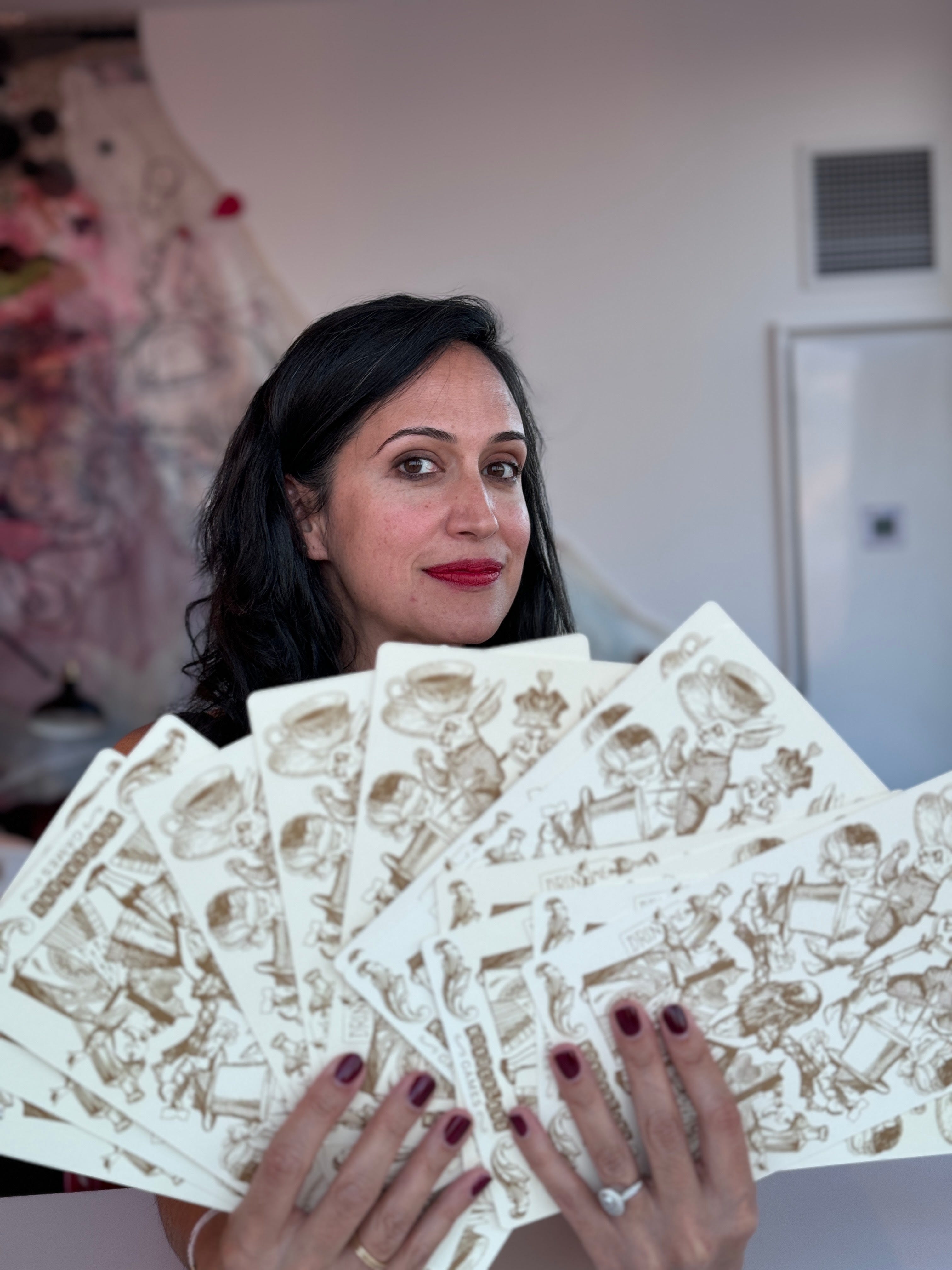
When we have these fights, her hands get clammy within five to eight seconds. There are certain veins in her forehead that will make a very pronounced appearance. She may have nightmares for three days running after a spirited intellectual discussion about whether recycling is an “actual thing.”
Pretty interesting, then, that she has become one of the world’s premier experts on conflict resolution. Pretty, pretty interesting.
Now, you would think that hating conflict would be a problem as a conflict expert. It would sort of be like Andre Agassi hating tennis.
But, famously, Andre Agassi does hate tennis. So I guess you could say Priya Parker is the Andre Agassi of conflict. She doesn’t like it. But she has absolutely mastered it.
And today is a very special day in our tempestuous household because Priya has just published a book whose simple, gargantuan ambition is to help everyone else master it, too—and in doing so recover some of the community and connection missing from our lives. It’s called The Art of Fighting, and it’s a master class.
She will be a lot less mad at me about some of what I’ve written above if you order the book right now. So do it for me.
But, mostly, do it for yourself and your people. I’ve had the unfair advantage of learning these ideas by living alongside Priya for years, and they have changed how I understand marriage, friendship, family, work, democracy, and what it means to stay in relationship with others when things get hard.
Before I go further, a few programming notes: Priya will be on my usual stomping grounds of “Morning Joe” at around 7:30 a.m. Eastern this morning. And then she will join me for a live right here on Substack probably around 8 a.m. Eastern — but subject to pub day vagaries. Let’s see what she has to say for herself.
And we just did our first joint podcast appearance, on “Reclaiming, with Monica Lewinsky.” Watch that on Apple, Spotify, or wherever you get your podcasts.
I actually don’t think we fight too much. Or any more than other couples. Our fights are not throwing-things fights. I don’t think they’ve ever risen to shouting. But we are two people who think a lot about how to live, and how others live, and how the world is, and I think it’s hard to be like that and not collide with your greatest love.
Sometimes when we’re having one of our arguments — Priya has a term for these that I love: “worthy grapples” — the kids will look a little alarmed. And Priya sometimes pauses and looks at them and says, “Papa and I are fighting because we love each other.” And this will either seem strange to you or totally sensible to you, but it represents the core of Priya’s thinking and approach in The Art of Fighting. We don’t fight with people we don’t care about; we don’t fight about things we don’t care about. We fight with and about that which we love.
Here is Priya’s thesis in a nutshell: Fights form. That’s what she believes and what she has taught me. Far from conflict being a sin, a problem, a distraction, an inconvenience — or any of the other things we call it to stave off actually facing things — Priya argues that conflict done well is generative: it lets us define ourselves, it is how we make things, it is a creative act.
Declaring independence is pretty conflictual; it’s how you make a country. Refusing to do some ritual at your wedding is conflictual; it’s how families break free of traditions that no longer serve. Criticizing and primarying incumbents in your own political party is conflictual; it’s also how parties reform.
Think about friend groups you may have had that thrived for years, and then something happened, and maybe no one said anything, and, great, terrific, some big blowup was avoided. But you know what? After a while, the group sort of fizzled. There are still birthday texts, maybe. But they’re no longer calls, and the joy has gone.
What Priya is trying to do with this book is teach you how to fight well. To avoid the two bad options our culture keeps offering us: unhealthy peace and unhealthy conflict — avoidant behavior, saying nothing, suppressing what we actually think; or, instead, burning the house down.
There is another way: facing conflicts thoughtfully and intentionally, putting things on the table, and getting through to the other side. An alternate title for this book was “Through”, but I’m not allowed to share that.

Priya is not trying to teach you to fight better because she thinks fighting is good. She hates it, remember. She is trying to teach you because she is angry and sad about how much human connection never comes to be simply because people can’t face conflict.
Her argument is that if you face the hard things with your people — if you grapple rather than ghost, bother rather than bounce — what awaits you on the other side isn’t merely a restoration of whatever existed before. Sometimes it’s a kind of closeness that could not have existed without the fight.
In this book, you will learn actual skills. You will learn why gossip can be good, actually. Why you should have paintball fights at work. How to look for the “relational longing” at the heart of so many conflicts. How to decide which conflicts shouldn’t be faced. How to know when a group should dissolve.
Many of you will already know Priya’s work from her classic book “The Art of Gathering.” That book and this new book seem different. But if one is about how to bring people together, the other is about what inevitably happens when you do. And they are bound by the following trait of Priya’s, to which I have more of a view than anyone else.

Priya is scandalized by how much more meaningful our lives could be, how little it can take to make them so, and how seldom we do. It makes her mad how much work life sucks for most people. How much meetings suck. It really pisses her off when we go to weddings, and all these amazing people from every facet of a life are in one place, and then nothing is done to help them become more than just a disparate group of people. And it makes her angry, I know this deeply, to see groups of people who could find so much more in each other, who could be for each other so much more than they are, not realizing that potential because it feels easier not to say what needs saying.
The last thing I want to say is that Priya, unlike many who share wisdom on Instagram, actually lives her ideas. Her work is fundamentally about trying. Trying to make things better. A prospective British publisher once passed on the proposal for “The Art of Gathering” with a snide note about how the book was marred by the American idea that things can be made better.
Well, they can. Priya knows how. And if you are willing to learn from her, as I am about 60 percent of the time, then you can, too.
Once we were on a beach in Martha’s Vineyard. Our firstborn, Orion, was maybe a year old or so. She was holding him, and he was holding a French fry from the fried-seafood mecca, Nancy’s. A seagull swooped down toward Orion, and its beak fully enclosed the French fry, but it overshot, and some of the webbing between Orion’s thumb and forefinger was caught in its bite.

In that quarter of a second between realizing what was about to happen and it happening, Priya and I both yelled at the seagull, but we yelled very different things.
I screamed “No!!!!!” at the seagull while thrusting my chest out toward it and trying to scare it, trying to make it think that its descendants would never know peace if it came an inch further. Priya, in that same moment, made a different sound. I think the word she said was “Hey!!!!” But the point was more how she said it. It had the tone of a kindergarten teacher whose young charge has begun to fingerpaint on the window.
She didn’t like what the seagull was doing. But, more important, she thought the seagull could do better. She believed in the gull. She wanted to teach it another way.
I wish my ex (and late) husband and I had fought civilly more. At least it’s communication.
Loved the seagull story!