

Sometimes I have a lot to say. This summer, I have had less to say. Soon I begin to hear a voice nagging: Should you be saying more? Where are your takes? You are at risk of becoming take-less, a kind of death.
The truth is, I haven’t been speaking as much because I’m in a reflective moment, planning to bring a new book to this community and the world this fall. As I’ve grown as a writer, I have come to learn that you can’t inhale and exhale at the same time.
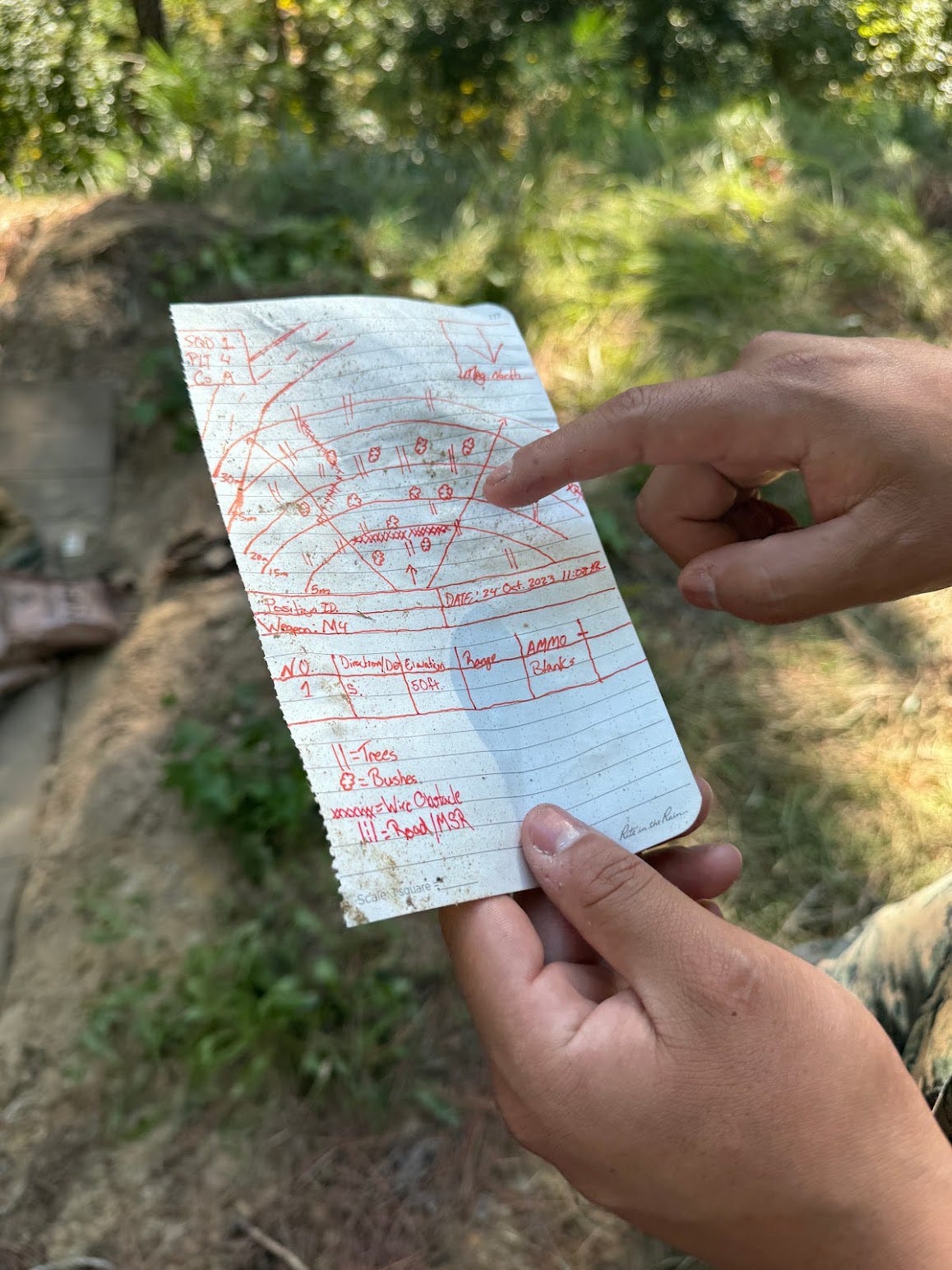
When it came to writing “Man in the Mirror,” there was a long period of inhaling in the form of reporting: taking in the stories of homeless people I was writing about, sitting for eight hours a day in a fluorescent-lit courtroom covering the criminal trial of Daniel Penny for the killing of Jordan Neely, shadowing Marines during trainings at Camp Lejeune, North Carolina. Sometimes I would come home from a few hours out in the field and feel like I should get back to work, write up my notes, write a scene even, and it just wouldn’t come out. I sometimes treat myself like a robot when I work, assuming endless reserves limited only by time. But it’s not how I, or it, works. I began to realize that I was coming home affected, haunted, changed by what I saw. I allowed myself simply to do the inhaling. There would time to write and time to speak.
And ultimately I wrote — wrote and wrote and wrote. I wrote so much that more than half of what I wrote would eventually be cut. Having been altered by what I saw, now I set about to distill it, in the hope that encountering what moved me might move you. This was a time of exhalation, and in that time I stopped breathing in — I stopped reading books and academic studies related to the issues I was writing about; I stopped following my characters around.
And now again I find myself in the time of breathing in. When the fall comes and the book lives in the world (September 29), the air will once again be flowing outward. In this between-time, what I’ve been thinking about is how deeply I was changed by the act of reporting and then of writing this book. “Man in the Mirror” is my fifth book, but I think it upended my life and shook my foundations more than anything I’ve ever done. And a lot of that has to do with the genre of book it is, a genre that has been my obsession since I was a very young man, but one that took me time and life to get to.
The formal name for this genre is “narrative nonfiction.” Now, if folks in The Ink community are like others I meet, some of you will completely know what this term means; others will have no idea. We journalists and writers are often bad at explaining what we do and how we do it. When I talk about “narrative nonfiction,” I’m using shorthand for a very specific kind of work.
It’s a form of journalism, on one level: reported, documented, evidence-based truth, drawn less from preexisting files or other books than from facts the author has gathered to move from private to public. At the same time, it’s narrative, which is to say, a story, hopefully it reads like a novel, it moves, it hooks, it has propulsion. There is a further element, in my mind at least, of interiority. In the work I most admire in this genre, we are not only encountering reported reality, and not only being offered that reality in a great yarn, but also getting a glimpse into other people’s minds. As in the best fiction, we are looking at life not only from the outside in, but from the inside out — how the world seems to others.
Now, I’m not here to throw any shade at fiction writers. They are rightly heroes of literature and of our culture generally. But the narrative nonfiction I grew up reading dazzled me because it had to do much of what fiction was doing — this cockpit view from inside of people’s heads; this page-turning drama — while making it all be true. The writer of narrative nonfiction has to have the imaginative confectioner on one shoulder and the nagging fact checker on the other. This is harder than it appears.
In our time, this peculiar hybrid undertaking has become all the more important, I would argue, for the following reason: I think most of you would agree that we have a crisis of trust — in institutions, in each other, in basic factual reality — that is perilous for our society. We also have a crisis of distraction, attention spans, scrolling addiction. I am biased here, but I believe that narrative nonfiction confronts this moment with a great deal to offer — and that is why I’m so attracted to it as a form for right now. Its rigor, its basis in fact and reporting and the vital civic labor of ferreting out what exactly is true, is an answer to the trust crisis. When I meet people who probably don’t hold very high regard for my opinions or worldview, but then they hear of where I took the trouble to go, whom I took the trouble to talk to, what documents I took the trouble to find, I notice that it always changes the air. At the same time, the best narrative nonfiction doesn’t simply dump facts on you. It doesn’t rest on the laurels of offering truth. It respects that you are some combination of busy, tired, stressed, bored, distracted, overworked, underpaid, and in a dozen pieces. It doesn’t judge you for not wanting to take on Serious Topics That Matter. It assumes the burden of hiding the broccoli in the mac and cheese. All you need to want is to be entertained; leave your edification to us.
Now, even the best narrative nonfiction writers out there are never going to be able to compete with, say, Jonathan Franzen. But think about it: these are people who craft narratives that read like a Franzen novel, except everything in them actually happened! (Stay tuned: In a future post, I’m going to share with you some of the writers in this genre who have had the most impact on me over the years.)
What I learned making “Man in the Mirror” is that narrative nonfiction of this kind is a transformative experience for the writer even before it reaches the reader. It goes so much deeper than other reporting I have done. You aren’t just reporting the facts; you are drinking people in, inhaling their beings, their ways of speech, how they see, what hurts them, what upsets them, what they fear. And you are not simply recording that this happened and then that happened. No, you are taking in enough of all of this stuff that you can recreate them as if from the inside. What it’s like to hear that police officer yell at you. What training instructions might have flashed through your mind as you initiated a chokehold. What it feels like to live on the street, down to the wet socks in October. What it’s like to be a powerful public servant who seems to have tremendous responsibility but in fact is thwarted from acting in all these ways.
I have learned the hard way that this kind of reporting and writing take more out of you, perhaps because you are making space for the beings of these others in your own mind and heart. In the years of writing this book, I was sometimes shorter-tempered, more hopeless, quicker to anger, more depressed. It took time to realize that it might be the intensity of the work I was doing, as opposed to general middle-age stuff. But then at the end of it all, you have these human beings you have studied up close to share with the world. And the hope is that their stories will be an invitation to people, that their lives will be engrossing, and that, through encounter with them, people will, as you did as the writer, be altered, be moved, be enlarged in what they are able to see.
I don’t think I’ve ever been as confident about something I’ve made as I am about “Man in the Mirror.” But I also don’t think I’ve ever been so raw about a piece of work. I aspire to be one of those artists who make the art only for themselves, who are able, as Rebecca Mead recently wrote of Ana Mendieta, “to hide herself away and make work that might only ever please or satisfy herself.” I of course did make this book for myself, but I also made it for you.
And I cannot wait to share it with you. Today I want to invite members of this community to be early champions of this book, evangelists who might help bring it to everyone who needs it. I want to discuss it with you, I want to think together about the questions that it raises, I want your help in making sure it finds its people.
And so I’m learning to say without embarrassment that I would love for you to preorder it — you can find your preferred retailer here. For those who like their books signed, there’s a special link I can share with you from the McNally Jackson bookstore: if you order from here, I will make sure you get a copy signed by me.
For now, know that I am deeply grateful for the support this community gives me — to write what I want to write, to step forward when I have something to say, and to hang back when it’s time to take a breath.
Homelessness is a gut wrenching issue on its own, especially if a loved one is homeless.
No wonder you're sapped...I lost my 21 yr old son after finally making him leave our home as a result of living with his drug addiction for five painful years. Rehab after rehab, police encounter after police encounter, lie after lie... I was going down the toilet with him, and told him he had to leave. He lasted 3 months on his own, and I've been left with PTSD reactions every time I encounter someone else who has no home.
You've needed recovery time, and will continue to need it! Go easy on yourself.
A powerful essay. Some things are worth waiting for. Best wishes on your book.