


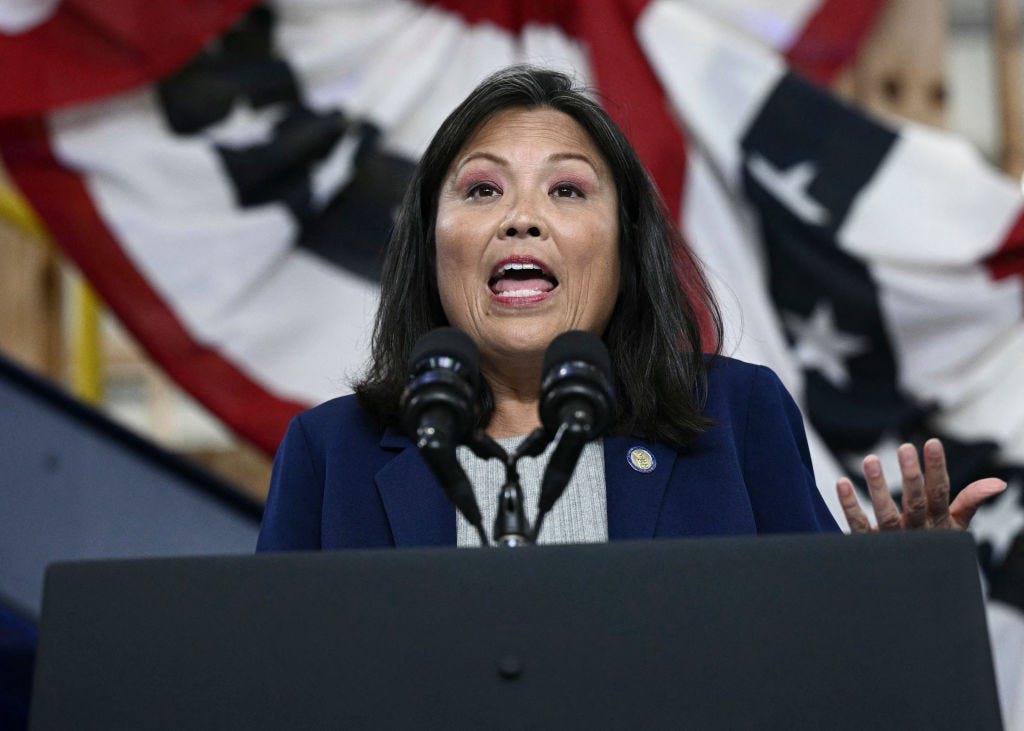
Zohran Mamdani was elected mayor on the strength of his promise to build a New York City for everyone, where the working people who build, maintain, and run the place can actually afford to live. And for the first time in decades, the city’s billionaires feel afraid. One of the objects of their fear-mongering, through articles in friendly publications, is Julie Su, the mayor’s new czar of economic justice.
Is New York going to drive the super-rich away? Is it going to abandon projects like building the High Line in favor of this “economic justice” agenda? Is big business going to be on the back foot in the new New York? These are the questions swirling around the new mayoralty, and Su in particular. So we decided to ask her directly.
We talked with Julie Su, the former acting U.S. secretary of labor, now the city’s first ever deputy mayor for economic justice, about whether billionaires should fear the Mamdani administration, what the Epstein files reveal about how New York works, and what she and Mamdani could — and would — actually do to rein in the city’s most visible predatory landlord, Donald Trump.
There has been much controversy about Su’s appointment from certain quarters of the establishment, so we’re making the full audio of our conversation available down below to our subscribers, with the caveat that the noise of the City Hall HVAC means the quality may not be as high as that of our other interviews.
Zohran Mamdani ran as much against his own Democratic Party’s way of dealing with economic justice as he did against Republicans. You’ve worked for a lot of different flavors of Democrat in your lifetime. What do you think are the failures of the modern Democratic Party’s approach to economic justice that created a path for him to win on a different story and made your job possible?
I think that there’s a lot of this analysis of where we are, where the Democratic Party is, that is based on, “Did we go too far in this thing? Did we do too much woke stuff?”
It’s easy to find criticism because of the state of the country today. But I actually think that one of the big problems is that we didn’t actually go far enough on many of the true commitments to justice.
I feel proud of the work we did under President Biden, because there was a lot of it that was very much about “How do we bring the economy back from the brink? How do we invest in communities and infrastructure?” $2 trillion worth of investments were not just about getting the economy back on track, but about actually creating good jobs and good union jobs.
But I feel like there was a lot more we could have done. A good lesson from the Biden administration is you may have good ideas, but you’ve got to deliver them more quickly, and you’ve got to deliver the way that people can feel them. And frankly, I think that there was still too much of the old way of thinking about how to move and who we had to answer to.
And I feel like what’s been so thrilling for people across, not just New York City, but across the state, across the country, even across the world, about Mayor Mamdani’s administration is that he has been so willing to call out the things that held us back from truly achieving justice and saying, “Here’s some really concrete ways that we’re going to measure what we mean by it.”
Look at the Epstein story that has consumed this country; it’s a story about incredibly rich people. A lot of it took place in New York. I think Epstein had the largest private home in New York. And it’s revealed a New York world that people don’t often have a glimpse of. I wonder how you, as you take on this job, read these revelations? Obviously, not just the salaciousness of it, but you’re getting a portrait for someone in your role of how this city works, and how these people work, and how they operate, and how they buy power. What have you learned in terms of what you’re up against?