


Thirteen years ago, I was strolling through a park with my parents, my wife, and an old college buddy named Dan Honig. My parents were staying with us; Dan was passing through town; we organized a park walk to slay many birds with one stone.
I must have realized that this was a particularly powerful constellation of people for me — three of the deepest witnesses to my life. I felt it was a good time to share some confusion I was feeling. I had some years earlier returned from India, where I covered the country for The New York Times. Now I was back in America and had a biweekly column. It was allowed to be about whatever I wanted. And the freedom was proving a challenge. What should I write about? Beneath that question: What was I about?
Dan has a brilliant mind, and he is the kind of friend who really tracks you, who can say to you, despite the separation of time and distance, “It’s funny that you’re thinking X now, because you used to say Y when we talked about this at Colin’s party.” As in, the party we were at together fifteen years ago.
So we’re walking, and I’m confessing my existential confusion, and Dan, friendship archivist that he is, says: I know what your thing is.
I was skeptical. What’s that, Dan?
Simple, he said. Ideas through people.
At that monent, I was in such a state of confusion about what I was doing, should be doing, did best, should no longer be doing. And from the moment I heard his three-word offhand observation, I thought: This!
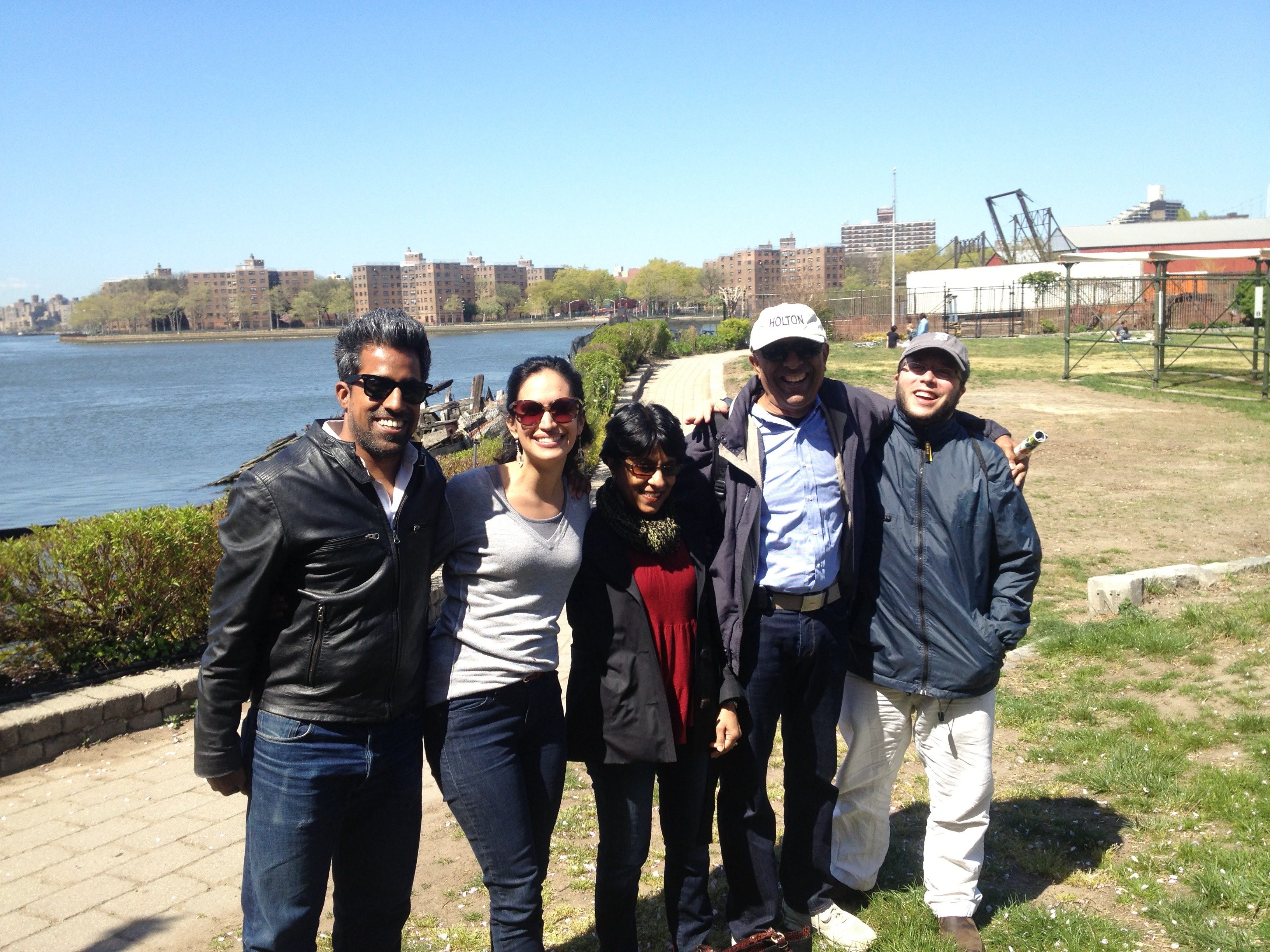
It was a real act of friendship, because Dan had hoovered up a vast pile of life data of the things I had written, the things we had bullshitted about late at night in college, the things we had read and discussed — and, wading through all of that muck, he had pulled out something simple and clarifying.
Ideas through people. I didn’t need to be sold on it at all. It felt so true from the moment he said it. I just hadn’t thought of it.
A few days later, I sent him my next New York Times column, written with this new focus in mind. “You really shook me into sense with what you said that day,” I said.
The ideas-through-people rubric helped me out of a dilemma I had long felt. I was obsessed with newspapers and journalism from my teenage years; all I had ever wanted was to write for The New York Times. But when I found my way into that work, I sometimes found it too fast, too reactive, too devoted to the update from yesterday to today, without the space and time to put things in their context. Others were far better than I was at getting the scoop, ferreting out the nugget, beating the competition. I was sometimes told I was too big-picture. On the other hand, whenever I had spent time in or near academia, I felt alienated by the abstraction of ideas for their own sake, divorced from real living. In journalism, I felt like the theory guy; among scholar types, I felt like the tabloid guy.
“Ideas through people” put it all together for me. That was what I had already been doing when I was at my best, but all too often buried in lots of other stuff. In India, I had investigated what happens to a small town when radical new ideas — natural human equality; the right and duty to make your own life, not just inherit your parents’ fate — start to take hold. In Texas, I had investigated the differences between a native-born patriotism that was akin to loving your mother whom you didn’t choose and an immigrant patriotism that was akin to loving your wife whom you did. In China, I had reported on the phenomenon of young people who didn’t associate being free with voting (which they couldn’t) so much as with openly dating and pursuing dynamic work opportunities and being able start ventures (which they could).
What Dan said clarified my sense of what I was supposed to be doing: Locate big ideas as they show up in people, as people grapple with them, argue with themselves and others over them, suffer their effects. It was a particular angle of attack, a way of working, that I embraced as my way. It meant there were many kinds of work I wouldn’t do, wouldn’t try. And that was helpful. I even began to teach a course at New York University’s journalism school. It was called, you guessed it, “Ideas Through People.” We read Katherine Boo and Adrian Nicole Leblanc and V.S. Naipaul and Svetlana Alexievich and Jimmy Breslin and Isabel Wilkerson; it was a good time.
In the books I have written since, Dan’s catchphrase has been a guiding light. Winners Take All is often summarized by others as a “takedown” of billionaires or philanthropy or Silicon Valley types or whatever. But really, in the methodology you find on the page, it’s ideas through people: it gets at those themes by getting inside people in whom contending ideas about democracy, wealth, and the common good are jousting. Same with The Persuaders, where it was less me making a case than me taking you inside the causes and minds of activists and organizers who were concerned about progressive movements more interested in finding heretics than winning converts.
In my forthcoming Man in the Mirror, the Dan Honig mandate has its fullest airing yet. When I first started reporting on the tragic case of Jordan Neely and Daniel Penny and their encounter on a New York subway, I was drawn in by the narrative of it all, by the story of these two lives, by the intricate details of the other people who began to enter the book’s telling. But, me being me, I found myself telescoping back and forth between the granularity of the project — for example, itemizing and writing a list of all the possessions of a homeless man being swept away by the New York Police Department — and the bigger human dilemmas at play here. The gritty detail, the colors and smells, mattered, as did the giant existential questions: What does it mean for a person suffering from severe mental illness to possess autonomy? What is the boundary of a city’s, a country’s, compassion? Who gets to define what is sick and what is healthy? Can constructive long-term public policy be made by short-termist elected leaders? How does a death grow into a movement? Who is granted the assumption of humanity? And, ultimately, what do we owe each other?

Yet for me, the way to answer these questions is to find them at work within people. The street is where doctrines are actually lived. In Man in the Mirror, in a hundred different human moments, the questions of our age are capsulized in a stray remark, a tense hug, a hasty decision, an act of care, an act of rage, an act of desperation.
I have never worked so hard on something, never poured so much of my heart and artistry and love of this country into something. I truly cannot wait to share it with you this fall. It’s a story of a tragedy below ground that is really a story about whether we can all find a way to live together. It’s a true crime story in which America itself is on trial. But really, I hope, it’s a story about our common humanity, and what brings us closer to it and what pulls us further way.
I am really proud of this book, and I would love to get it into your hands. If you want to pre-order it now, it helps the cause greatly, because it sends a signal to the world, which means more people find out about it.
It’s a book written with all of my love, and I want that love to reach far and wide.
You can find it via these links:
Bookshop.org | Amazon | Barnes & Noble | Target | Walmart | Hudson Booksellers | Powell’s | Books-a-Million
And once it’s in the world, we will have many chances to read it together, talk about it together, here in the Ink community. Thank you for everything this community is.
What a terrific insight from Dan that so many of us can relate to - we're 'street thinkers' just trying to connect the granular dots in the big picture! Anand, it seems to give you, though, a very special ability/ lens to bring other people into focus in your interviews. Thank you for all you give to us so generously
I love the way you think/feel/express yourself. You are a very talented communicator and I can feel the cost to you and admire that you don’t back away from wrestling with the whole cloth, the fabric of our lives as we are living it here and now. I can’t wait to read your new book.Thank you Anand!!