

Sometimes a friend sees you more clearly than you see yourself. Sometimes that means more clearly than you wish to be seen.
That’s how it was with my friend Sam. We had come up as journalists together, had met while we were foreign correspondents in India, had built parallel New York lives together, raising kids, writing, trying to make sense of the age.
A few years ago, first gingerly, then more pointedly, he confronted me. He was worried for me. Worried that, the more my ideas got out there, the more of an audience I found in print and online, I was changing.
I prided myself on my reporting, but I was becoming known for my opinions. I prided myself on being able to understand and empathetically portray anyone, but I was succumbing to the temptations of us and them, good people and bad people. I prided myself on my curiosity, but I had given in to the incentives of the age, offering up my certitude instead. I prided myself on reflectiveness, but now I sometimes seemed more interested in what Twitter fight I could get into than what I could learn.
Maybe I’m only saying this to feel less alone, but I think what happened to me happened to a lot of us in these last years. It was some cursed stew of social media and what the algorithms reward; the economics of outrage; the relentless speed of everything now and the lack of time to think; ideological tribes that reward orthodoxy and punish open, free, unbounded thinking; the very real stakes of an authoritarian age in which it felt important to take a stand.
Sam was right. In these last years, I had changed. And the change felt like doing the right thing, it felt rewarded, it felt important. But what it amounted to was walking away from some of the qualities I had once most valued, and becoming someone tempted by reducing more than complicating, condemning more than understanding.
Donald Trump is not just a president. He is a culture. While only some of us have voted for him, all of us belong to that culture.
Maybe you feel this happened to you, too. Maybe you feel exhausted by this way of moving through the world, in which there is great pressure to reduce the kaleidoscopic complexity of other people to a simple story with flattened characters.
I was annoyed by Sam’s interventions. He was right. I began to listen. One day, in May 2023, he called. I have your next book, he said. The story of Jordan Neely and Daniel Penny and their fateful encounter on a New York subway car — it was, he said, a tragedy whose retelling would let me tell the story of America itself. But he also said it was a reporting project that would get me back to being the guy he met two decades earlier in India, the reporter who wanted to understand, not the pundit who knew.
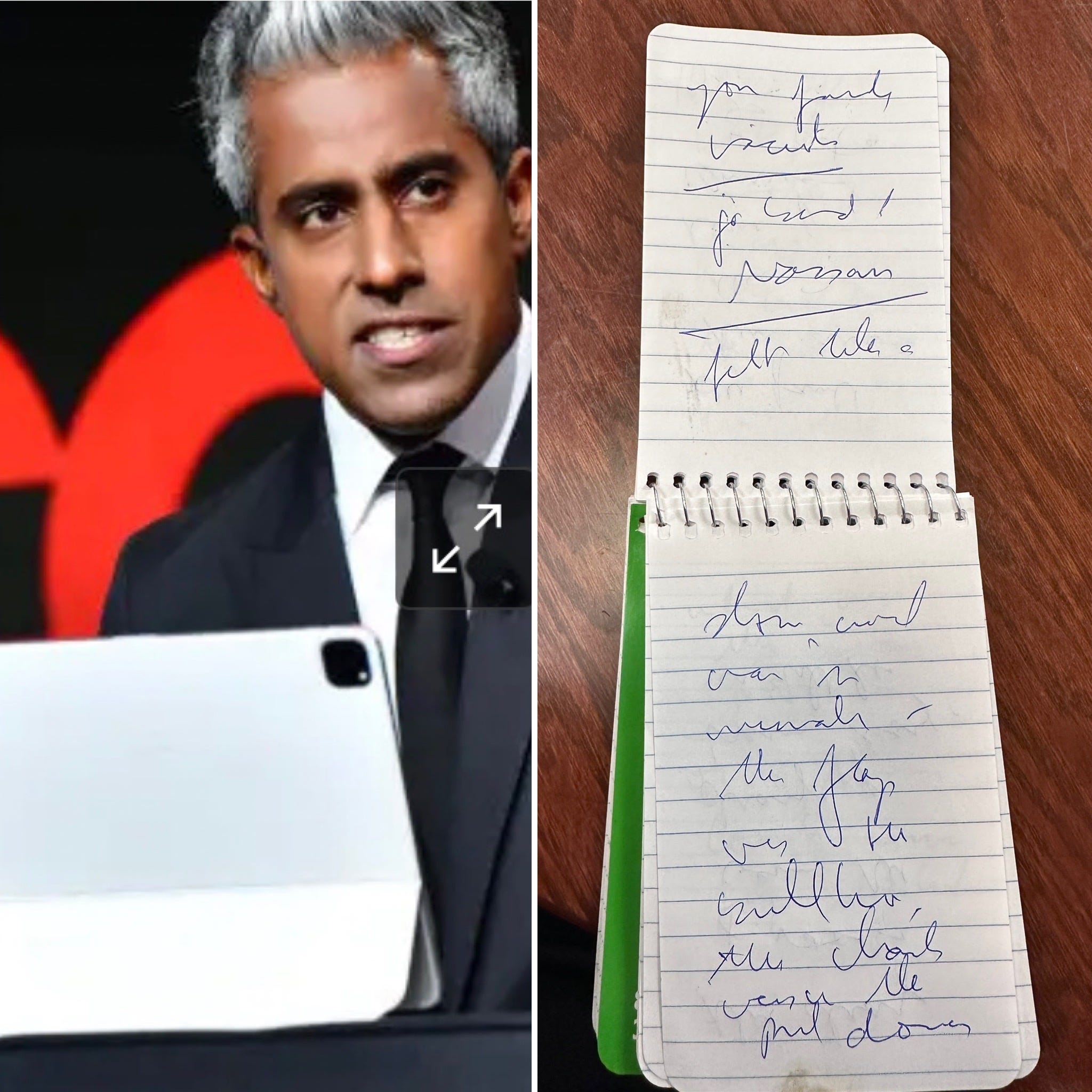
I am neither a spiritual person nor from Los Angeles, so I don’t generally talk like this, but what I remember from diving into the reporting for MAN IN THE MIRROR was that it felt like a spiritual cleanse. I realized I had become, more than I wanted, a person with a TelePrompTer, and now I was back to being a person with a notebook.
As I began to probe the story of that killing and all that it catalyzed and reflected, I realized it was a story, at its heart, about the difficulty of seeing each other as fully human. I resolved that I would invert that in my writing. A story of dehumanization would be told by a humanizing approach. Perhaps I could use the book to jolt myself back into a humanizing way of working; maybe it would help readers do the same.
I began to reach out to my potential subjects, who I call characters, even though that may sound strange when talking about nonfiction. It is an enormous act of faith to let someone else tell your story. I was reaching out to everyone from grieving relatives to city hall officials, Republican lawyers to revolutionary activists. And I made them all a promise that felt shaky even to me back then, because I was still very much known for another way of working. (In my defense, I was still putting out rigorously reported work all the while, but what got attention was what grabbed and poked and affirmed.) The promise I made was that this book would be different from what they might have seen from me. It would try to tell everyone’s story with all the empathy I could summon. It would be a kind of perspective roulette, in which you’re looking at the world through this person’s eyes, then that person’s eyes next. I think I told some that I intended to capture them so that if their mother read it, she would say, You got ’em.
I felt like one of those Silicon Valley founders who pitch the vision and then, if investors buy in, now have to make the thing. It had been a long time since I worked in the way I was proposing, and I had never done it at the scale and depth I was about to. But I made these promises, and I began.
In journalism, you don’t owe your subjects a portrait they will like. But I did try as hard as I ever have to paint portraits people couldn’t deny. That meant understanding why our cities feel so dystopian and crime-plagued to some and feel so oppressive and over-policed to other people. It meant spending days with a Marine Corps unit that Penny belonged to, in order to understand the training that forged him and would become central to his trial. It meant trying to understand the Michael Jackson super-fan community Neely was part of, and the intricate social dynamics among mere mimics, capable street impersonators, and devoted tribute artists. It meant spending time on the street with homeless people and trying to see what they see when the police come, and spending time with the police doing impossible jobs. It meant trying to inhabit the brilliant, caring minds of homeless outreach workers who walk the streets with an encyclopedic knowledge of the clients they serve and what they need.
Fake it till you make it, they say. In this case, simply doing this kind of work again started to change the person doing the work. I felt it palpably. It’s hard to explain, but I felt myself reopening, deepening, relaxing from the culture of reactivity I was in and had sought to navigate and at times mastered.
Now that the book is about to be birthed, here is my deepest hope for it. What it did for me, I want to offer that to you in turn. Yes, it’s a story, and if I may say so, a pretty riveting one. But my real dream for it is that it will help you think and feel and see in ways that our culture has made so elusive.
What it really is, I hope, is a story that will open you up and restore in you some of the humanity we have all lost in this draining time.
I first wrote this book for myself. Now I offer it to you as a tool, maybe a jolt of the kind Sam gave me, to return to yourself. Maybe it will help you, too, become someone who is more curious and doesn’t so easily flatten. Maybe it will help you remember how hard our biggest shared questions are, how hard so many people are trying. Maybe it will help you think, not just react. Maybe it will help you hold complexity — without letting go of moral clarity. Maybe it will make you harder to dupe and con and manipulate by politicians who profit from our failure to see each other fully. Maybe it will give you permission to listen to other ways of seeing without feeling like you are complicit or capitulating — just listening.
Let me go out on a limb. I don’t think Trump is the biggest threat to our democracy. I think we are. Our culture, our behavior, our ways, which created a Petri dish for him. All around us, I see the culture that I succumbed to — that perhaps I’m still part of. Where living with difference feels like surrender. Where finding common ground is smeared as selling out. Where we dream of the society being purged of those we don’t like. Where the dream of domination trumps the pursuit of persuasion. Where we police who is welcome on our raft instead of building a ship big enough for all.
Democracy requires an ability to look into the hearts of those you share space with. If we continue to be addicted to caricatures of each other, we will continued to be ruled by political caricature artists, those with a gift for exaggerating our worst features and sorting us into lucrative Uses and Thems.
At first, this book I have written was about the failure of some people to fully see others. It grew into a project in which I had to confront my own failures on this score, and grow. Now it’s an invitation to you. Are you ready to look, interested in looking, at our common life, at the people you share a country with, and seeing them fully? Are you tired, as I realize I had become, of seeing sides and longing to see humanity?
If you want to come along on this journey with me, I invite you to preorder MAN IN THE MIRROR today. My unabashed dream for this book is immense: I want to get enough of us talking and thinking about these questions that things can change. I am so grateful for you in this community for being the seedbed of this conversation.
And I can finally reveal the first major event where I hope to meet many of you Ink folks — and reach even more of you virtually.
It’s on Wednesday, September 30, at the 92nd Street Y in New York, one of the most historic stages for public discussion in New York, from which Joan Didion and James Baldwin and Kurt Vonnegut and Tom Wolfe and E.E. Cummings and Arthur Miller seeded ideas for the world. The legendary editor Tina Brown will interview me onstage. Get a ticket, bring friends, and join us for what promises to be a special night of conversation about cities, belonging, writing, truth telling, and humanity.

This is a brave statement of self-reflection that should be heeded by every serious journalist, particularly those who disengaged from on-the-spot, first-hand reporting to join the cushier, bloated ranks of the punditry. As a former national journalist from a bygone era, I've watched with dismay the relentless march of opinion trafficking into the once separated arena of reporting. It has infected our most august news outlets like the NY Times and Washington Post and has contributed mightily to the loss of the trust they and so many of their traditional peers once enjoyed. And of course it has helped fuel the toxic polarization that has led to our present political discontent. Anand speaks of re-animating empathy for his subjects, for seeing everyone as fully human, not just as pawns in the ether of the algorithm-driven internet. I'll suggest reviving something simpler: old-fashioned curiosity, the desire to explore unfamiliar - possibly hostile - territory, to discover, to be surprised. Anand also decries the certitude he acquired from his high perch in the commentariat. Here's another word for it: complacency. I look forward to his new book.
Don’t worry! No one will be getting it before 9/29. So you won’t be behind. And then, yes, many conversations we will have here!