

"Everything is niche now"
Matchas vs. bodegas, and what happens when cities are no longer for people in them
In the decade and a half I’ve lived in Brooklyn, I’ve noticed a strange thing. There will be a neighborhood business hanging on with great ardor. Maybe it’s a beloved old haunt; maybe it’s fallen into bleak times. Sometimes, it goes away. And across the neighborhood there is a special sort of urban curiosity: What will replace it?
The answer, almost always in my years here, is: Something for far fewer people. Something more expensive, more niche, more high-margin, more exclusionary.
Dollar coffees are thus replaced by $3.75 coffees; laundry machines are replaced by TikTok-famous cardamom buns; dumplings are replaced by truffle chili oil sardines.
With news this morning of inflation jumping again, thanks to a war of whim in Iran, we often think of these price rises as a matter of each and every thing getting a few percentage points more expensive. But sometimes it takes this other form: the offerings themselves changing, going up by multiples, not mere percents, not just growing dearer but changing who can buy, changing who a community feels for.
Yesterday, speaking with Antonio Reynoso, the Brooklyn borough president, who is now running for Congress, I put this observation to him and was struck by his response. He explained what I was seeing as the more sinister, insidious thing I was imagining but hadn’t quite pinned down. In his telling, this kind of leapfrog economy isn’t just about a rising cost of living. It’s about an economy where the concentration of resources at the top means that businesses increasingly calculate that they can make more money serving fewer people.
That inequality makes the economy inaccessible to many people is clear; that it also makes the economy less relevant to people struck me as a twist worth considering.
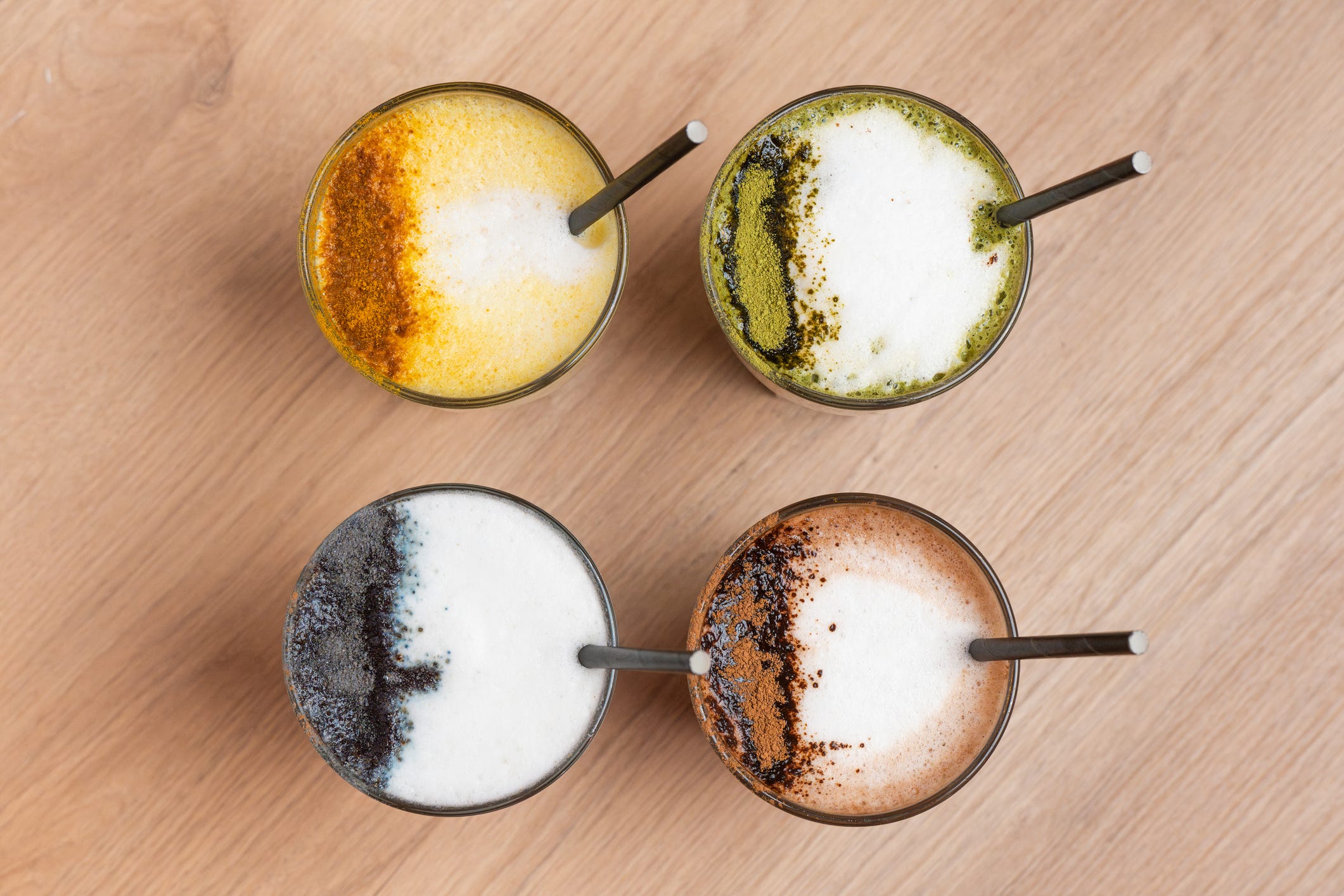
If you can sell fifty $20 matchas in a day, you can replace a place selling 1,000 single-dollar coffees a day and make more money. Good for you. But that one little space now caters to fifty people every day, not 1,000. Those fifty, Reynoso explains, often aren’t local; they may be obsessives hopping from phone-scroll icon to phone-scroll icon.
The point is that, in addition to making life expensive, which is something that we do measure and heavily influences our politics, this phenomenon leaves a lot of people without utility-like businesses at all. It makes where they live no longer for them.
I was struck by Reynoso’s analysis, and thought you should check out the transcript.
And watch our conversation if you haven’t. And subscribe if you haven’t done that.
Bacon-egg-and-cheese vs. matcha
Q: An observation I would make is that often we’d be walking down the street in our neighborhood or other neighborhoods, and you’d see the kind of places that were being replaced — or that were around — were often quite old, had been there a long time, sometimes had fallen into bad repair, tough times, but they were holding on.
And then when they shut down and get replaced, it wasn’t economically one step up or one notch up or two notches up. It was twenty-five notches up. So there were places, frankly, that shut down where I probably wouldn’t have gone in because maybe it was not great quality or not super clean or whatever. And then it’s replaced by a place I could never afford.
And I look around, I have a sense of who lives here. Obviously, there are people who can afford it, but the economics of Brooklyn have seemed very weird to me — going from holes in the wall to places that often feel more expensive than Manhattan. I think you can often get better value in Manhattan. Can you explain that?…Why is this the path development took in Brooklyn?
A: …There’s just an unlimited amount of people that have a ton of money, and they all want to be in New York. I know New York exceptionalism says we’re at the center of the universe and we feel that way — but it is. People can’t stop coming here.
The problem in those places where you see those economic jumps is that we go from a bodega that doesn’t sell any healthy drinks to a place that only sells healthy drinks at like $40 a pop.
You needed 150 sales to make that bodega work. With twenty sales, you’re good on this new site. So I think the margins changed, and the way people look at economics changed. They don’t need to serve everybody. They just need to serve a niche.
Everything is niche now. When you walk around Brooklyn, you go into a shop and it’s very particular about what they’re selling and what they’re doing. It isn’t just a coffee shop with standard things. This is a shop of a certain type that people travel to because you’re exclusive, you’re doing something new.
A: Eastern Japanese Buddhist matcha or whatever.
Q: And you can only get it in this location. That’s what they’re selling for 20 bucks.
Then you have the 20 diehards that live in Brooklyn, and that’s where they go every single day. So I think it’s a game of exclusivity — people are willing to pay more to be among the only ones doing something. It’s like that with nightclubs. We used to have a ton of them in Brooklyn and New York City, and they weren’t exclusive. It was about getting the most people in so it could be a bash. Now you have sites where having 150 or 200 people at a time is the ideal market for independent bands, versus back in the day when a club could have a thousand people in it.
Everything is more focused, more particular. Brooklyn has changed significantly. Back in the day, it didn’t matter what corner you were on — the next bodega looked like the [last] one. You knew you were going to get a bacon, egg, and cheese, and for the most part it was going to be within range. That’s just not the case anymore. You can walk four, five, six blocks before you see a bodega like you used to.
Now what you see instead is coffee shops. Coffee shops have become the new bodegas. Times have changed.
Watch our full conversation here:


I believe that this is why so many sidewalk food carts have appeared.
They offer good food at reasonable prices.
When I am in midtown I see people lining up to buy lunch.
Since there are no coffee shops or affordable restaurants, these carts fill a void.
And I believe that there is now an award for the best food cart.
Apparently they have become an institution in NYC
There is a more primary factor involved. 60 years ago, families opened small coffee shops, bars, "restaurants," corner stores,.. to provide jobs for the family. It was a way of life and a culture for many thousands of families and their neighborhood customers. "Service" was neighbor-to-neighbor, prices allowed the owner family to get by, choices were limited to what the neighborhood wanted and this built deep roots of home.
Then, investors discovered these consumer mass markets, gutted anti-trust and other regulations, and producers discovered the miracle of "new" or "improved" diversification of product lines and ways to limit distribution. This led to the spread of ever-larger supermarkets, formula (large) bars and restaurants, etc. offering lower prices and wider selections. "Service" was no longer a way of life between neighbors but impersonal, low wage workers hoping to move up by impressing investor bosses. This is what killed most of the small, family businesses that defined Manhattan, too, before before Brooklyn. The same for all US inner-cities including DC where I live.
The new "niche" obsession is much more a rejection of the impersonal mass retail markets than of the mostly long-ago closed family businesses and its neighborhood culture. Most family businesses that still survive have found a way to raise -- or not lower -- their prices to attract those affluent enough (and old enough) to appreciate personal service in cozy settings. The niche obsession is for those too young to have known what has been lost and/or for the rootless who, for whatever reason, believe it makes them superior. Support your local, family-run businesses!