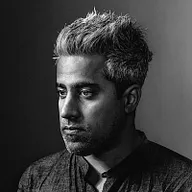


For those Ink Book Club members who, like me, aren’t Iranologists, our March selection will be illuminating — and deja vu-producing. Scott Anderson’s Kirkus Prize-winning King of Kings: The Iranian Revolution–A Story of Hubris, Delusion and Catastrophic Miscalculation probes Iran’s complex geopolitical history and underscores that our country’s leaders have failed yet again to get Iran right.

Anderson is a contributing writer for The New York Times Magazine and author of several widely praised books, including Lawrence in Arabia: War, Deceit, Imperial Folly and the Making of the Modern Middle East, a finalist for the 2013 National Book Critics’ Circle Award. Presumably, Anderson didn’t know while researching his book that eight months after its publication, we would be at war with Iran.
What does he think about this turn of events? With his vast knowledge of the country, what are his thoughts about the path this war might take? And what does he make of the Trump administration’s various rationales for it? We’ll ask the author about that and much else tomorrow, Friday, March 13, at 12:30 p.m. Eastern, when he joins us for a live Ink Book Club conversation.
King of Kings couldn’t be more timely, as it asks critical questions about what the U.S. is trying to achieve right now: Have we learned nothing from our past mistakes in Iran and elsewhere in the region? Are there remaining experts in the State Department and elsewhere who would have urged a different course of action if consulted? Does King of Kings provide a useful backstory for why we are where we are, or is this uniquely Trumpian?
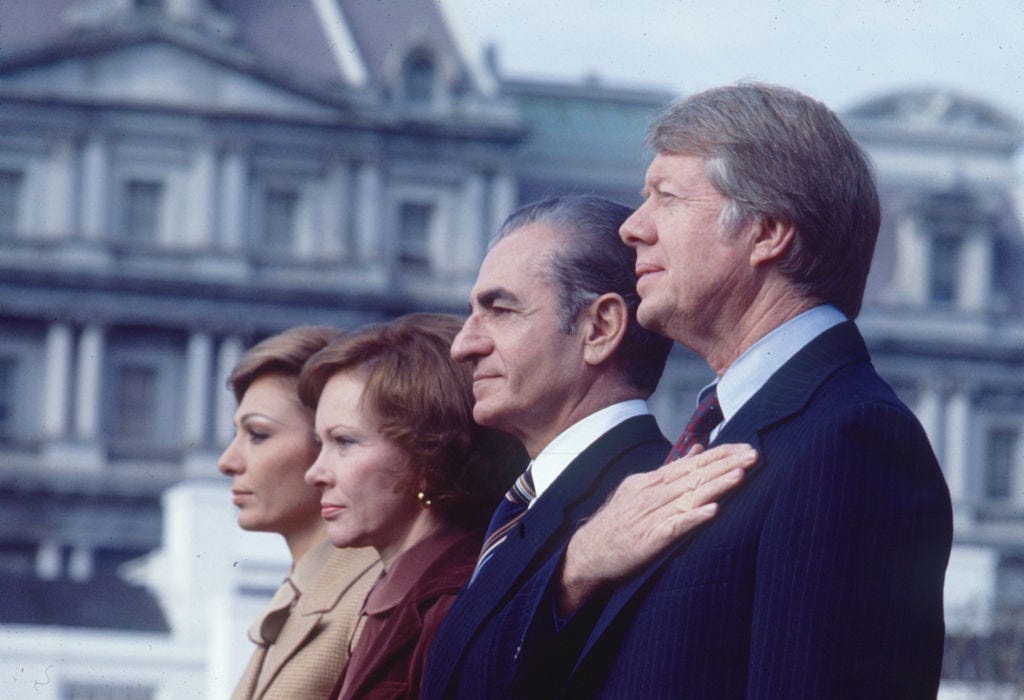
Meantime, there is something Shakespearean about the saga of the “King of Kings”---Shah Mohammed Reza Pahlavi — who the U.S. helped re-install in the Iranian throne in 1953, after a CIA coup dubbed Operation Ajax overthrew the country’s prime minister, who’d nationalized Iran’s oil industry. It’s still all about oil….
Anderson opens his account in 1977, as protests against the Shah are being secretly nurtured by an ascendant cleric named Ayatollah Khomeini. By this time, the Shah had essentially lost the people’s confidence, but, surrounded by sycophants and feted by the Carter administration, he’s oblivious to the winds of change, even with access to the intel and muscle of his feared secret police, SAVAK. And while there were a few American voices who detected the seeds of the Iranian Revolution taking root, those voices were silenced — even censured — by the Carter Administration, so firmly did it believe in the Shah’s invincibility and their own worldview.
Soon thereafter, the Iranian Revolution of 1979 blindsided the Carter administration and the Shah himself, forcing the leader into exile and sparking seismic reverberations throughout the world — effects Anderson likens to the far-reaching impacts of the French and Soviet revolutions.
Willful blindness and a failure to comprehend the mood of the Iranian people were our enemies then. How does Anderson analogize that series of errors in the context of today’s stream of blunders? What are the lessons we could be deriving from a deeper knowledge of that period? And why have our current leaders been caught unawares by the resilience of the Iranian regime? In its adoption of the so-called Mosaic Doctrine, had the Iranian Revolutionary Guard Corps (IRGC) anticipated the current U.S. attacks and specifically prepared to defend against them? These are some of the questions we’ll pose to Anderson tomorrow.
Below, you’ll find some thoughts to consider in advance of Friday’s conversation. The Ink Book Club’s events are open to all paid subscribers to The Ink. If you haven’t yet become part of our community, join today. And if you’re already a member, consider giving a gift or group subscription.