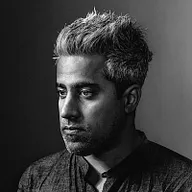



The central tension in Vigil, by George Saunders, is whether human character and action are pre-ordained, therefore immutable, or if, by honestly confronting who you are and how you’ve behaved in the world, change and redemption are possible.
Jill, the spirit guide dispatched to help ease oil tycoon K.J. Boone into the afterlife, adheres to the former view and wants only to offer her charge comfort as he faces death. Then there’s the Frenchman (likely modeled on Étienne Lenoir, an early innovator of the internal combustion engine), who refuses to let sleeping dogs lie. He will use any means necessary to convince Boone to reflect on the environmental damage his work over the decades has wrought, and to get him to feel remorse for it, a process he himself has undergone.
In the end, though, does Vigil reconcile these conflicting beliefs? And does the novel reveal its author’s perspective on the matter?

In a recent interview with Ezra Klein, Saunders confessed that he is “big into contradictions” and likes to wrestle with them on the page. He was raised in the Catholic tradition, where sin necessitates judgment and repentance. Saunders says he defines “sin” as being “out of step with truth.” On the other hand, in Buddhism, a misalignment with truth has a karmic effect, causing suffering for the individual who has erred, which makes judgment unnecessary.
Vigil is also a contemplation of capitalism and power. For Boone, power is a safety net that enables him to believe he’s not a mere mortal, subject to the world’s vagaries. He is thankful “he was going home now, to God, his dear God…Thank you, Lord, thank you,” he prays, “for making me who I was and not some little squirming powerless nincompoop.”
Jill reflects on how Boone came to be Boone.
My charge had been born him…Then life had happened to that him, exerting upon it certain deleterious effects, including but not limited to: the powerful nature of his early desires, which had led him to strive, which in turn had led him to accomplish, and in accomplishing, he had brought about harm…It had all unscrolled just as it must.
This week, on Wednesday, February 25, at 1:30 p.m. Eastern (one hour later than usual), we’ll have a chance to discuss these questions with Vigil author George Saunders. Meanwhile, what are your thoughts?
The Ink Book Club is open to all paid subscribers to The Ink. If you haven’t yet become part of our community, join today. And if you’re already a member, consider giving a gift or group subscription.