


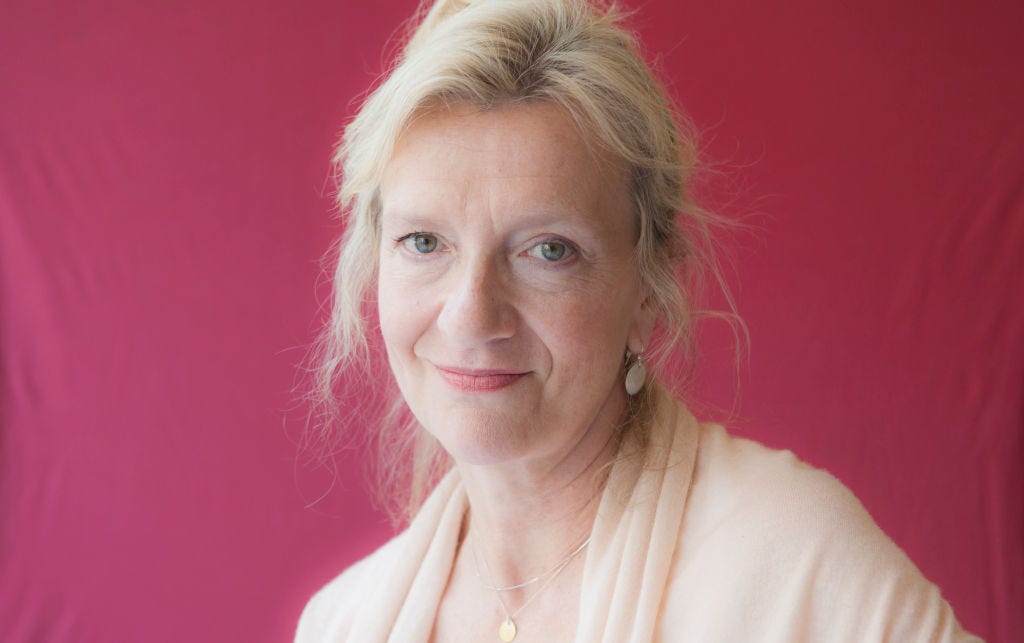
First things first: Join us live today at 12:30 p.m. Eastern for an exclusive conversation with acclaimed novelist Rebecca Makkai about chairing this year’s Pulitzer Prize for fiction jury. She promises to spill some tea about what goes on behind the scenes. We’ll also ask the "I Have Some Questions for You” author what else she’s reading now.
Our Ink Book Club selection for June is Pulitzer Prize-winning author Elizabeth Strout’s The Things We Never Say. (We will sit down for a live conversation with the author on Wednesday, June 17 at 12:30 p.m. Eastern.) Somehow in our snark-infested, virality-obsessed culture, a novel whose drama is contained mainly inside the head of a New England schoolteacher is one of the bestselling books in the country.
On the outside, Artie Dam is viewed variously by his family and friends as a decent, amiable man, though perhaps slightly “dopey.” To his son Rob, “he was an enigma…his father had always been Jolly Artie, and Rob felt there had to be more to him. But he could not really find it.” None of those around him are aware of how much feeling churns within--that Artie is a tortured soul obsessed with suicide. Strout writes that Artie’s wife Evie “was unaware–even after their thirty-four years of married life–of the deep pockets of sensitivity that Artie had.”
Strout’s eleventh novel subtly, expertly captures our fractious times, and the toll its accompanying divisiveness has wrought on our emotional health. She identifies the dissonance between the way the world perceives us — and what we choose to signal — and what’s really transpiring within the whirling dervishes of our brains.
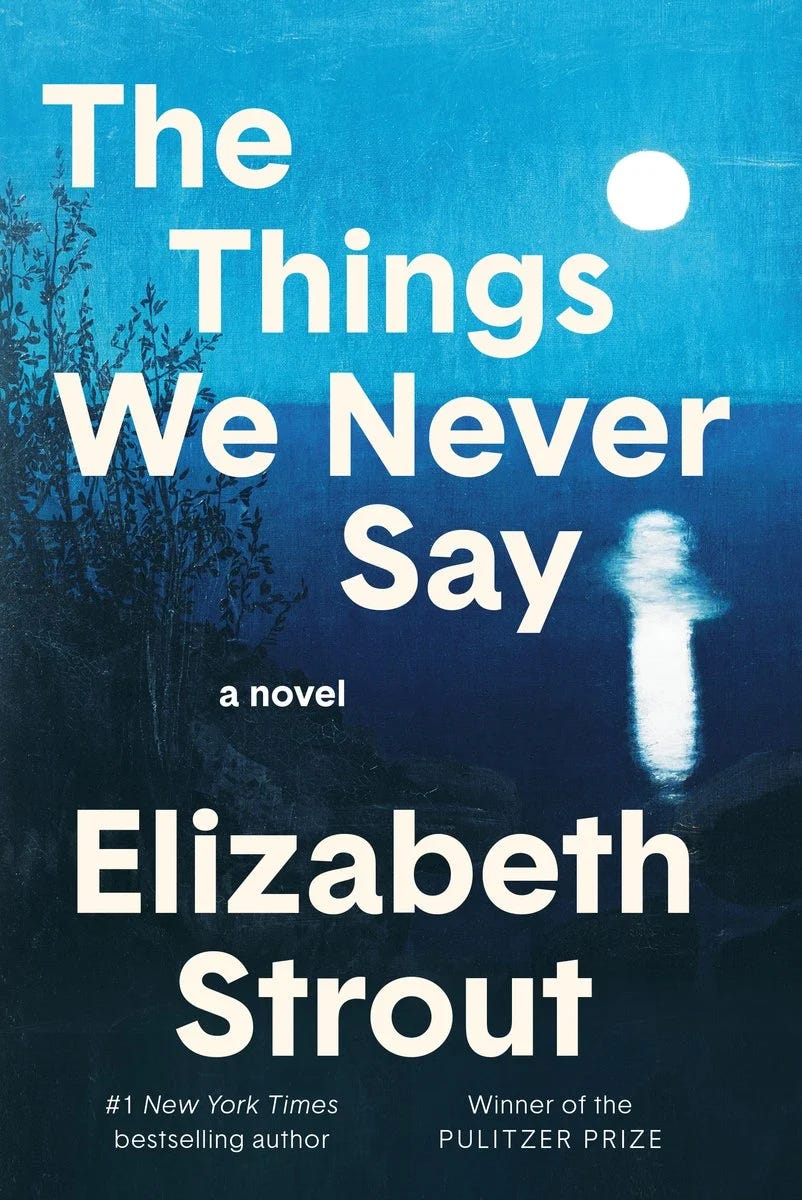
Early on in the book, Strout suggests a reversal of the idea that “no man is an island.” What her characters represent is that while we may be interconnected in various ways, at a fundamental level, we are actually isolated beings, alone on our individual islands. In other words, our present collective loneliness should come as no surprise.
Despite its sense of quiet despair, why does The Things We Never Say leave the reader with a sense of life’s beauty, of optimism? Novelist Maggie Shipstead put her finger on it in her New York Times review of the book: “A loss of innocence is possible at any age, but the pain of disillusionment can have a silver lining: the opportunity to live with a deeper understanding of reality.”
We’d love to hear your thoughts on Artie and The Things We Never Say. We’ll sit down with the author herself later this month to discuss her process, where she finds inspiration, and why she felt compelled to attribute much of Artie’s discontent to the era of Trump.
And don’t forget to join us for a behind-the-scenes chat with Rebecca Makkai, chair of this year’s Pulitzer Prize for fiction jury. We may even get a sense of how Angel Down, by Daniel Kraus — a WW I novel with elements of horror and magical realism narrated in one endless sentence — beat out a fan favorite, Audition, by Katie Kitamura, to win the Pulitzer. Please join us! Here’s Makkai’s Substack piece “Book Prizes Don’t Work How You Think.”
Below, you’ll find some discussion and reflection prompts to consider. The Ink Book Club’s events are open to all paid subscribers to The Ink. If you haven’t yet become part of our community, join today. And if you’re already a member, consider giving a gift or group subscription.